Tag: Tibet

  • Mt. Kailash (Kailas)

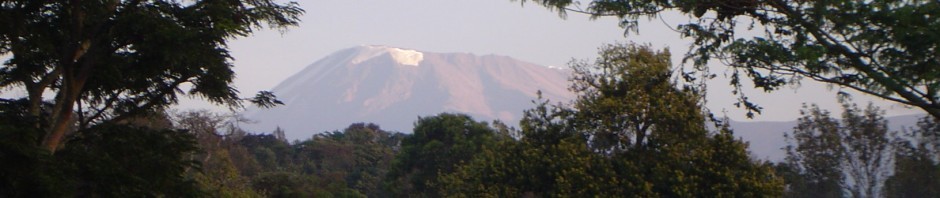
    Mt. Kailash (6714 m) is one of the most sacred places of Tibet.  It is a holy place for Buddhists, Hindus and Jains.  To Tibetans it means ‘the pillar of heaven’, to Hindus it is the place where Shiva resides.  All of the pilgrims, which come still nowadays in great numbers, make a ‘kora’ (a walk around the mountain), which has the auspicious effect of ‘cleansing the sins of a lifetime’ (13 times or even 108 times are even more auspicious…).  Along the kora are several monasteries, caves, buddha footprints, chörtens, sky burial sites, ‘sin-testing stones’, etc… The highest point is Drölma-la (5630m), a pass with an abundance of prayer flags.   Pilgrims often do the kora in one (very long) day – a Westerner will need at least three days. Staying overnight in one of the ‘guesthouses’ attached to the monasteries is possible, although a lot of people do camp.  It is forbidden to climb the mountain, something which has not been done till now. Trekking around the mountain is possible from mid-May till mid-October.

    Mt. Kailash,  North Face
    On the Kailash kora...


  • The people of Tibet

    TIBET, MAY-JUNE 2001 –   What makes Tibet so special ?  Its people.  This story tells the tale of the people of Tibet I’ve encountered on my travels through this amazing part of the world, and is meant as a tribute to their faith and courage.  I try to evoke the scenes I’ve seen, but you have to see it yourself to believe it. 


    Lhasa

    Let’s start in the capital, Lhasa in the barkhor area, near the Jokhang temple.  Take a moment to relax and sit down on the square in front of the Jokhang, and observe the people.  The most obvious are the owners of the souvenirs stalls , which try to attract your attention.  Filter these ones out, and what you see is the real heart of Tibet : the pilgrims, monks, nuns, children, women going to the market place,… See the pilgrims prostrating in front of the Jokhang – some have been traveling for months from their home, or see them chanting and rotating their prayer wheels.

    Pilgrims in front of the Jokhang

    Now do some ‘koras’ on the Barkhor.  Again avoid the souvenirs sellers, but go into the side alleys, and discover the horn-and-cymbals-playing-monks and the chanting nuns; let the prayer wheels rotate that are placed on several spots along the way,  discover a crowded courtyard full of ordinary people drinking yak butter tea… Do the same walk many times; everytime something else will be around the corner.  Then enter the darkness of the Jokhang (where only tourists buy tickets), smell the yak butter lamps and queue in line with the  hundreds of Tibetans to see the Jowo.  Go into the different chapels and look and listen… This is all too much for your senses; it’s not a museum you visit, you’re part of the daily life of Tibet now, this is living culture you experience.  Then when it becomes all too much, go to the roof and see the beautifull sights, and bathe in the light, be surrounded by goldplated roofs.  If you’re lucky, discuss with some of the monks.  It will be hard to leave this place because you just can’t figure out what is realy happening and want to understand, experience it all again…

    Villages and nomads

    Children begging for your attention Children in the local restaurant

    But there is more than religion alone.  When you go into the ‘true wilderness’ of Tibet, you will encounter the people in the little villages and the nomads with their yaks, and the horsemen along the way.  If possible your guide can bring you into a Tibetan home where you can have some yak butter tea with the family… Go to the local restaurants, where the cook first comes taking to you (a phrase book is handy) and then starts cooking.  The other locals will come and look while you have your diner, as if they’ve never seen someone eating noodles.  Or you will encounter the sales men and women, who still travel like they used to do in medieval times, on foot and with mules and donkeys.  In any of these encounters the children will encirle in large numbers, and if you have cameras (who hasn’t ?), you will be very popular.  It made me happy to meet at some occasion children that were just curious and playfull and not only beggars (they sadly enough often are however).

    Nomads posing

    It’s impossible to forget the people of Tibet.  It’s amazing how they still have preserved their culture.  You will leave Tibet with an ever lasting impression.

  • Mount Kailash Kora – continued

    KAILASH, JUNE 2001 – continued…

    Day two

    The big hiking day ! Today we had to cross the highest point on the kora, Drölma-la, about 5600 metres.  I woke up and the cold I had been developing the last couple of days, was now really annoying me.  I had not slept well and had to cough a lot.  Not a good start and with every hundred metres I went up, it took away more of my energy.  By the time I reached the Drölma-la, as the air became very thin, I was completely exhausted and had to rest every two steps to catch my breath.  I could see the player flags on top of the pass but I simply was out of energy and sat down for a while to eat a little.  It was great to reach the top… but I felt miserable.  I decided not to stay here any longer and after I sent my paper windhorses to the heavens, I went down.  I quickly felt better, and by the time I passed the Gori Kund frozen lake, I rested to have a short lunch.  I had to stop for a herd of yaks anyway and while I was sitting there, I enjoyed – with great admiration once again –  the singing of the Tibetan pilgrims who came down too, their voices having a wide reach. On the way further down, after having crossed a snow covered field, it was a matter of  finding your own way down between the boulders, untill we finally reached a river, on the East side of Kailash.  The last three hours of our 10 hours hiking day were like endless… After every bend, I expected to see the Zutul-puk monastery, the place we were staying for the night, but everytime there were only more rocks.  I kept on singing my favorite songs in my head (and sometimes uploud), just to try to forget my cold, my exhausted body and sore feet.  The monastery was finally there and it was such a good sight ! Even with the dogs we had to throw stones to, didn’t spoil our happiness…

    Zutul-puk guesthouse and monastery


    Zutul-puk was even more basic with very odd-looking beds (piles of stones with wooden berds on top of it) , and we had a visitor that night in the form of a foor legged gray species with a long tail (which we never found back and since we were tired didn’t care about too much).  There was a kitchen however and the people there (especially the kids) were just wonderful !

    Day 3

    High mountain beauty

    The next morning, after another night of little sleep, I went for a visit to the monastery, to see Milarepa’s cave.   The monastery was deserted (there are only four monks in the monastery over there).  I encountered one of them, who obviously knew I was looking for the cave, and he showed me the way.  The cave is a small and low one, and the tale is told that Milarepa pushed the ceiling higher with his hands – his palms are still visible in the rock.  Once we were on our way for the last leg of our kora, we encountered the footprints and ellbow prints of Milarepa and a lot of piles of mani stones,  also some prostrating female pilgrims, which I gave some money, out of awe – it appeared just so unreal.  The third day was only some four hours of hiking, with beautiful sights of the mountains and a great canyon.  At the end, we were glad to be without sin and shared our remaining food and snacks with our porters who had carried all our stuff for the last three days.  And we were off for the holy lake of Manasarovar, to relax and take a bath in hot spring water –  it was the best bath ever !

  • Mount Kailash Kora

    KAILASH, JUNE 2001 – After a bouncing drive of several days on the high planes of Tibet, after having crossed numerous high passes, after more than a week without a shower, we finally arrived on the sacred place of  Mount Kailash.  In Darchen, a little change of plan already : we arranged for porters to carry our luggage and most importantly our drinking water,  since there were no more yaks for hire.  It was the day of the Saga Dawa festival and the place was crowded with pilgrims from Tibet and India.  The only accomodation was also ‘fully booked’, so to speak, and we had to rely on our camping skills and had to set up the tent.


    Kailash Kora

    Dinner in open air with the wind blowing heavily in our faces, for the first time in Tibet I was really a little cold that night. Pilgrims came nearby asking for some food, it was hard to resist to give something, but since they were numerous, we could easily give away all of our food, and we had three days of hiking ahead of us… Tibetans usually do the Kailash kora, a hike of 53 kilometres around the Holy Mountain of Kailash, in one long day.  Some do it all the way prostrating, which must take them weeks to complete the kora.  High above on the rocks where we were sitting, there was a sky burial site, and we could see the vultures flying above it.  Somebody was just buried there a couple of days ago, and we were advised not to go up there – I think this was only appropriate, we should not interfere and show our respect by staying away. In the evening, some of my travel companions played their Tibetan horn they had bought in Lhasa,  in the freezing cold.  It was great fun but did not last long, as the temperature was nicer inside the tent, and we had to rest early today.  One of our drivers slept in the open air that night, another one had left to walk the kora (he would come back early tomorrow morning).

    Camping in the shadows of Kailash

    Day 1

    The next morning, the sky was bright and there was fresh snow on the mountains.  After a short breakfast and after having packed, the porters showed up and discussed who had to carry what.  We started our first day of hiking, towards the first monastery near the North face of Kailash, the place we would sleep that night.  It took me about six hours to get there.  The path was almost all the way flat, with only a few ups and downs, but hiking above 4500 metres really took a lot of effort ! The whole day I walked in a valley with steep walls of rock besides me and a river, sometimes covered with a thick ice sheet.  When the wind was blowing above it, it was surely freezing.  But the sun was shining, and we could have a picknick in the sun and relax for a while.  About halfway the canyon, we reached the West face of Kailash. There is a prostration point there and several chörtens.  Somebody asked me to take his picture, and I had mine taken there too (just couldn’t resist).  The final two hours were kind of hard since the altitude was getting to us.  When we saw the monastery on the rocks on the other side of the river, we knew we were not far anymore, and behind the corner, we saw the splendors of the North face, shining in the sun ! We had regained energy by this amazing sight, and we went just a little bit quicker, crossing a little glacier river, and reached the guesthouse of the monastery, which turned out to be very basic with dirt floors and no toilets nor water, but what a sight in front of our door !  I spent some time resting and admiring the Kailash mountain.  After that, I went up to the chörten, passing the grazing yaks, and had a view on some snow field at the end of the glacier.  I didn’t go all the way up to the glacier, since it became misty and I was tired.  By the time I was at the guesthouse again, it was snowing already.  Kailash was now completely gone in the mist. We went to bed soon afterwards.

    Kailash

  • Saga Dawa, moments of magic

    TARBOCHE (KAILASH), JUNE 2001 – This is the story about one of the most impressive moments I’ve ever witnessed anywhere.  Still now that I’m “back with my feet on the ground” for some months already, I sometimes wonder if I was really there… but I was there, and everything was so amazing ! 


    Saga Dawa

    “Saga Dawa is an important Tibetan Buddhist festival, held each year on the full moon day of the fourth lunar month of the Tibetan calendar, to celebrate Sakyamuni ‘s enlightenment.” , that’s what every guidebook will tell you.  But actually having been there, to me at that moment it was more like being part of a magic event, something that gets a total grip on all of your senses.  So what’s going on ?  Each year, they replace the Tarboche flagpole, a huge pole that stands on the Kailash kora, south of the mountain.  People from all over Tibet gather here that day to attach their prayer flags they brought from home, to pray, and to help erect the flagpole.  The flagpole should stand perfectly upright, or else things are not good for Tibet.  The whole ceremony is led by a Lama from the nearby monastery.  It’s his job to make it work ‘right first time’.

    Tarboche, an unusual sight

    I was lucky to arrive just about one hour before the actual flagpole ceremony began.  Hours before the actual rising of the flagpole, people circumbate the flagpole that is down on the ground now.  They pray and throw ‘windhorses’ (little pieces of coloured paper with buddhist scriptures on them) into the air.  They help to remove last years prayer flags and attach new ones.  As a visitor you are almost forced to follow them as they go around and around, time after time.  Along the sides, on the slope of the nearby hills, a lot of people are sitting to watch the ‘spectacle’ and there are musicians which play all the time on their horns and symbals.

    Using the A-structures Two trucks and a lot of people...

    The flagpole is first erected half-way, using A-structures and ropes.  The Lama continually gives instructions on how to do it, when to stop and when to go on.  Everyone can help pulling the ropes, that’s the ‘non-organised’ part of it, but there are always plenty of people doing this spontaneously.  When they cannot go further using the A-structures, they pause for about half an hour.  The Lama sits on the side, and all the time people come to sit in front of them, to talk to him, to give him some gift (mostly some drink !), to ask him for good fortune.  They do not ‘queue’ however, as soon as someone is gone, someone else comes out of the walking crowds – it all seems not organised, but in fact it’s a very special way of organisation !

    Then comes the final part, the last step that has to result in the perfect upright position of the flagpole.  A steel cable is attached to two trucks, engines are warmed up, and then, on the sign of the Lama, they go backward, pulling the flagpole.  To be able to control the movement, on both sides of the flagpole people pull ropes too, to prevent it doesn’t incline to one or the other direction.  Once the trucks start moving, it all goes very fast, the flagpole is moving, the A-structures that were supporting it, fall down, and only seconds later it is all over.  And then big magic occurs, the flagpole stands upright, and at that very moment, thousands of windhorses fly into the sky… like an explosion of prayers going to the heavens.  You can really feel a sudden great sense of happiness surounding you. Like in meditation, reaching a pure sense of happiness happened here. The ceremony was personally gratifying and deep with a sense that something great occured. To experience a similar meditation feeling, click here and meditate on.

    All is well for Tibet !

    The next moment, people start circumbating the flagpole again, this time to assure themselves the job is well done, and that all is well.  I joined them in doing this, in some kind of almost euphoria.  Some hours later the place is empty again, except for the tents further away belonging to the people that will spend the night here, maybe to return the next day, or  to do the Kailash kora.  I asked our Tibetan driver if the flagpole was in a good position and he answered me ‘everything is OK, this is good for Tibet’.

    The Saga Dawa festival has been held here for the last thousand years… Having been part just once is such a powerfull experience, I’ll never forget these moments of magic.