Tag: Japan

  • The bullet train

    JAPAN, JULY 1998 – On my travel through Japan, I’ve used the shinkansen (or ‘bullet train’) for large distance travel.  This is an expensive way of travel, but there are many advantages : it’s very fast (it runs 300 km/h to 450 km/h), it’s very comfortable, and it’s an exiting experience. 


    As in many countries, traveling by train in Japan adds to your travel experience.  It’s a way to learn something about the locals, just by observing them or even try to start a conversation with them if possible.  And it’s a great way to view a variety of landscapes in a short amount of time.  The shinkansen trains are very well organised.  They run “on the dot” :  when your ticket says 14h34, it means 14h34, not 14h35 !  On the several occasions I’ve taken shinkansen, this appeared to be true.  But the organisation goes way beyond being punctual (although no other country in the world can beat them on this point)…

    Shinkansen ticket Two generations of the bullet train

    It all starts buying tickets. Of course this is highly computerised process.  All seats are numbered – most people reserve their seat in advance, although this is not necessary, it’s highly recommended just because most people do, there are hardly any free non-reserved seats.  A booking can be made several days in advance and you can easily book several train trips at a time.  When you have figured out what platform you should be on (we used to rely on the time of departure to find the platform), you should join the queue for your carriage (also mentionned on your ticket somewhere).  On the platform the carriage number is shown by large numbers on the floor – people queue behind this numbers (just as you would queue in the postoffice).  There also is big yellow line – this is not to be crossed at any time.  Sometimes a shinkansen passes through the station at a big speed – you could be blown away by the air movement when to close.  Some minutes before the time mentioned by the ticket, the train arrives.  The door of your carriage opens exactly above the number on the platform (not one meter to the left or right).  When everyone has boarded, after allowing people to get off, the train departs exactly on the time the ticket states.  Don’t forget they also load the catering and other stuff, and change personell during that time.  It’s already truly amazing.

    Arrival in the station

    Once you’re inside the train, just find your seat and you’re ready for the fast ride.  The display above each door shows constantly where you are, what distance is left to the next stop, and the speed of the train.  The doors are sliding doors, that (of course) open and close automatically.  The seats are comfortable and of course everything is airconditioned (which is not a luxury in July !).  At some point during the trip the guard of the train comes inside your carriage.  He first greets every one by making a bow.  He repeats this when he leaves you’re carriage, as a sign of respect and meaning to say “thank you” to everyone.  Of course you can also drink something and eat something on the train.  Very popular, and very tasteful, are the “bento-boxes“.  These are carton or wooden boxes that come in large variety of Japanese food. You can buy them in the lunch carriage, but they are also distributed by someone of the staff coming along, shouting “bento, bento”…

    Bento box

    When you finally arrive at your end point, sometimes 500 kilometres further, you’re ready to get into the crowds, and will probably discover a new world again.

  • Climbing Mt. Fuji

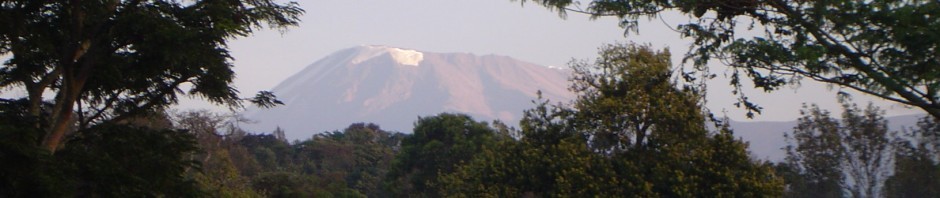
    MT. FUJI, JULY 1998 – Fuji-san, the highest point of Japan, the holy mountain…  This perfect conical vulcano is snow-capped during most of the year, and therefore hard to climb.  However during July and August the mountain is open to everyone who wants to go up this 3776 metres of rock and ashes…

    The day before we arrived in the railway station Shin-Fuji, coming from Tokyo. We had stayed in a little hotel, in which there stayed a lot of fellow Mt. Fuji-hikers.  Early in the morning we took the bus to the 5th station on Mt. Fuji. This is as far as the bus will take you up the mountain.  From this point, we began our hike up, under a cloud-filled sky.  Today we would go up to the 7th station, just above 3000 metres, we would sleep there to continue to the top the next day.  On the mountain there are 10 ‘stations’ , these are mountain huts with basic, Japanese style, accomodation.  There is no water on the mountain, except for the bottled water they sell everywhere along the way… of course the price is high because all of the goods have to be carried up the mountain.

    The trail on Mt. Fuji

    It took us a couple of hours to reach the ‘7th station’.  If you want to sleep in one of the mountain huts, you have to make a reservation well in advance, since places are limited.  However upon stating who we were, it was not clear to the ‘staff’ we had a reservation.  We got a “maybe” as answer on this question.  Later we found out this was the “old 7th station”, so we probably must have a reservation for the “new 7th station”, higher up the mountain.  As we went further, the “new” 7th station already came in sight when suddenly a thunderstorm broke loose.  Within minutes the otherwise till now easy walk became a harsh hike ! We could not see where to walk anymore (I luckily noticed some signs “do not pass – danger !” in time), we were soaked, the wind was fierce.  And we were so close to the mountain hut !  We reached it a couple of minutes later, and wanted – as many others – go inside as quickly as possible.  But that was not so easy.  This mountain hut was a “Japanese style” one, had a tatami floor, and we were asked to remove our (very wet by now) walking boots and rain gear, before entering !  When inside, we could change our trousers and other wet clothing.  They gave us some plastic bags to put our wet shoes and clothes in – a matter of keeping things tidy and clean.  And indeed it was the most clean mountain hut I had ever seen, this could only be possible in Japan !

    Inside the hut, we drank some tea and ate our evening meal.  We met several other Japanese hikers that were very interested in our story : why we wanted to climb Mt. Fuji and where we came from… Around seven o’clock it was bedtime.  The manager of the hut called everyone by name (with some difficulties to pronounce ours) and showed us our place in one of the four ‘beds’. Along both sides of the long ‘sleeping room‘, on two levels, there was room for about 50 persons side by side, men, women and children all together.  Also in the room we had entered first, futon were now enrolled onto the tatami, so this space could be used too.   When everyone had been shown it’s place, there was virtually no space to move anymore.  Only a small corridor was left to jump out of the wooden ’50-person bed’.

    Sleeping was not easy.  That night around midnight there was another big storm, and one of the Japanese called me to come outside.  The spectacle was unbelievable. It turned out we were above the clouds and seeing the lighting from there was something really different and I had never seen this before.  It appeared as if the clouds were exploding.  Above us there were many stars… it was as an ‘unreal’ experience.

    sunrise on top of Mt Fuji

    After sunrise, in full daylight now, we first ate our breakfast and rested for a while.  On top of Mt. Fuji, there is a postoffice, a hut where you can buy drinks and food, and there even is a ‘street ‘ with  souvenir stalls and vending machines (!).  We continued to make a circular walk around the crater.  The sights were fantastic.  The sun was shining and beneath us there were only clouds.  In the distance only the highest mountain tops of the Japanese Alps were visible.  Sunscreen and a cap were the items that were needed now !

    postoffice A walk around the crater

    A couple of hours later, around 2-3 AM, everyone started to get ready to hike again.  The sky above us was full of stars, the tunderstorm had finished.  The staff of the hut gave us our breakfast to take with us ‘for later’.   It was freezing cold.  I luckily had enough spare clothes with me, with three layers of  T-shirt, a fleece and a raincoat, woolen hat and not to forget gloves, I could stay warm.  Another item not to forget was the flashlight of course !   There were many people on the mountain by now.  Everyone wanted to be on top before sunrise.  The last part of the hike was ‘jammed’ with people ! I reached the top only minutes before sunrise.  It was a spectacular sight !

    An couple of hours later, it was time to go down again.  We said goodbye to this beautiful mountain and headed down for the bus, the bullet train and Tokyo !

  • On a festival in Kyoto

    KYOTO, JULY 1998 – Kyoto, city of 1000 temples… On my stay in Kyoto, I visited a few of the most known Buddhist temples and Shinto shrines. Apart from the historical and architectural value, these places are interesting to watch day-to-day life of Japanese people who come here to pray, or who are just on a daytrip.  Typically a shrine or temple is a whole complex of gates, stairs, paths, buidings and gardens.  Some of the temples are also part of a monastery.  In Japan, it is generally allowed to take pictures of everything, also inside temples.

    On special days of the year, there is a festival organised.  I was lucky to be in Kyoto on the day of the Yasaka shrine festival.  To the outsider like me, it all seems a bit chaotic at first look – but in fact there’s a clear order in all of this.  In the morning, the participants all gather inside the shrine complex to form a procession.  There’s a lot of shouting and moving back-and-forth till everything is organised as intended to be.  A lot of (mostly Japanese) tourists take the opportunity to have their picture taken next to some of the participants.  The costumes are really spectacular.  On the signs of the organisators, the procession then starts moving making a loop through the city.  Quite surprisingly, (always busy) traffic is not prohibited during this procession.  A lot of spectators are watching all along the route, some people follow the procession.

    Formation of the procession
    Formation of the procession

    After the one hour or so, the procession returns to the shrine.  Then the ‘performances’ start inside the shrine grounds.  The place is now filled with people, coming to watch the drumming and  the dancing.   Again there are a lot of things happening simultaneously, and there is a big crowd.  It is amazing to experience such an event.  The traditional values of the Japanese culture are clearly present and integrated in the otherwise modern organised Japanese society.

    Through the streets of Kyoto